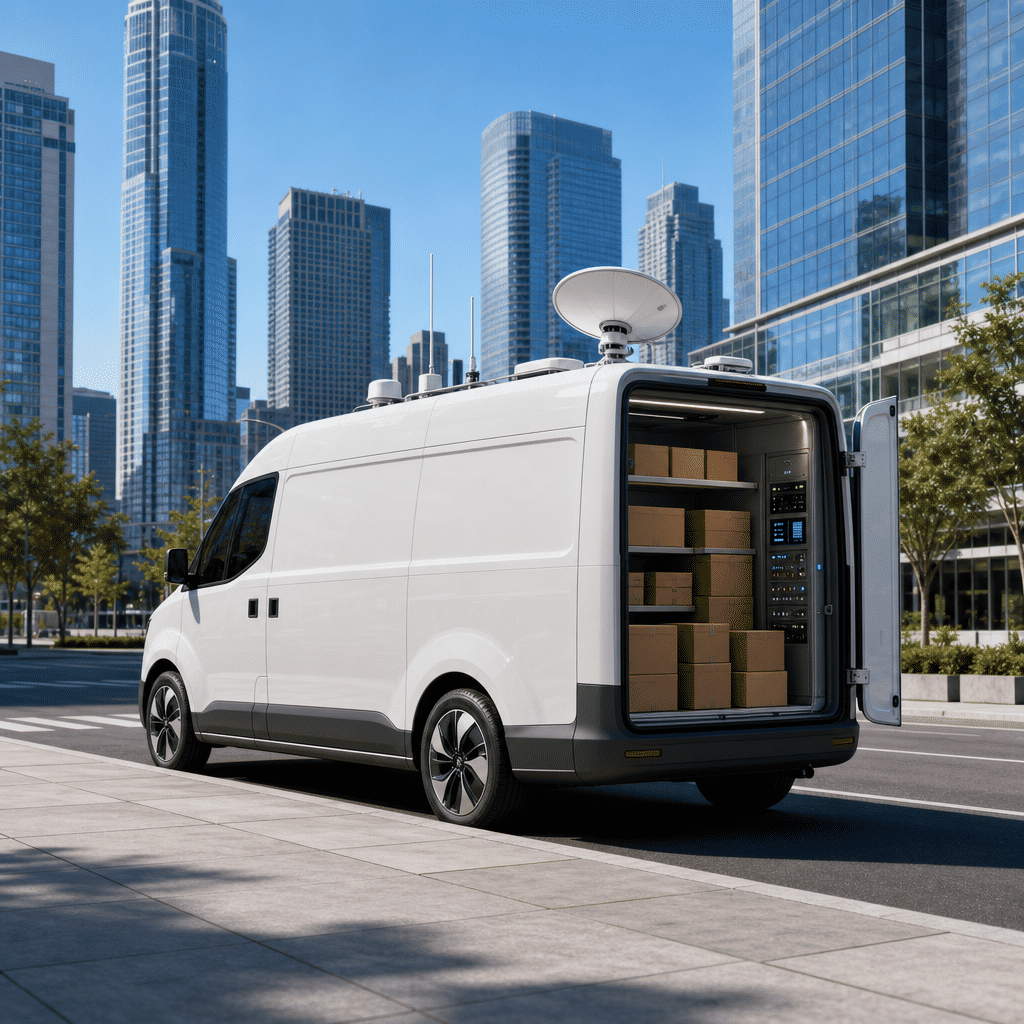
The courier industry, once reliant on traditional methods of transportation and communication, is undergoing a transformative revolution powered by innovative technologies. These advancements are not only enhancing the speed and efficiency of package deliveries but also significantly increasing their reliability across the United States. As consumer expectations continue to rise, courier services are leveraging cutting-edge technologies to meet demands and gain a competitive edge.
One of the most transformative technologies in courier services is artificial intelligence (AI). AI-driven algorithms are improving every step of the delivery process, from route optimization to package sorting. By analyzing vast datasets, AI systems can calculate the most efficient routes in real-time, significantly reducing delivery times and fuel consumption. This efficiency is particularly vital when considering the complex logistics of urban deliveries where traffic and environmental factors constantly fluctuate.
Closely related to AI is the use of machine learning and predictive analytics. These technologies anticipate demand patterns, allowing companies to allocate resources more effectively. By forecasting peak times and potential challenges, courier services can better manage their workflows, ensuring timely deliveries and minimizing the risk of errors. Predictive analytics also play a crucial role in inventory management, ensuring that warehouses are stocked appropriately based on anticipated future demands.
Automation is another significant innovation reshaping the courier landscape. From autonomous vehicles to robotic sorters, automation is taking the industry by storm. In urban settings, delivery robots are increasingly common, particularly for last-mile deliveries. These robots not only reduce labor costs but also provide contactless delivery options—a critical feature in today's health-conscious world. Meanwhile, autonomous trucks and drones are being tested and deployed to handle longer delivery routes, promising remarkable efficiency and cost-saving impacts.
Blockchain technology is emerging as a vital tool in enhancing transparency and security within the courier service industry. By using immutable digital ledgers, blockchain ensures that every step of the delivery process is recorded and verifiable, from the initial dispatch to the final delivery. This not only bolsters trust among customers but also simplifies dispute resolutions and improves overall service reliability.
The Internet of Things (IoT) is playing a pivotal role in enhancing real-time tracking and monitoring capabilities. IoT-enabled sensors can track a package's location, condition, and even environmental factors such as temperature and humidity. This functionality is especially critical for time-sensitive and fragile deliveries, such as pharmaceuticals and perishables. Customers benefit from accurate delivery updates, thus enhancing their experience and satisfaction.
Furthermore, augmented reality (AR) and virtual reality (VR) are becoming instrumental in training and improving the efficiency of personnel within the courier industry. These technologies facilitate immersive and interactive training experiences, enabling employees to simulate logistics scenarios and practice handling complex situations without risk. As skilled workers are essential for maintaining high service standards, this innovation contributes significantly to the industry's operational success.
Sustainability is also a growing concern, and technology is playing a key role in addressing environmental impacts. Electric and hybrid vehicles, powered by renewable energy sources, are becoming a staple in company fleets. Additionally, advanced packaging technologies are leading to the development of innovative, eco-friendly materials that reduce waste and carbon footprints.
In conclusion, the integration of these innovative technologies is fundamentally transforming the courier services industry in the USA. By embracing AI, machine learning, automation, blockchain, IoT, AR/VR, and sustainable practices, courier companies are poised to meet the ever-increasing demands of efficiency, speed, and reliability. As technology continues to advance, it will undoubtedly open up new frontiers in how we handle courier services, making them smarter, faster, and more sustainable for everyone involved.